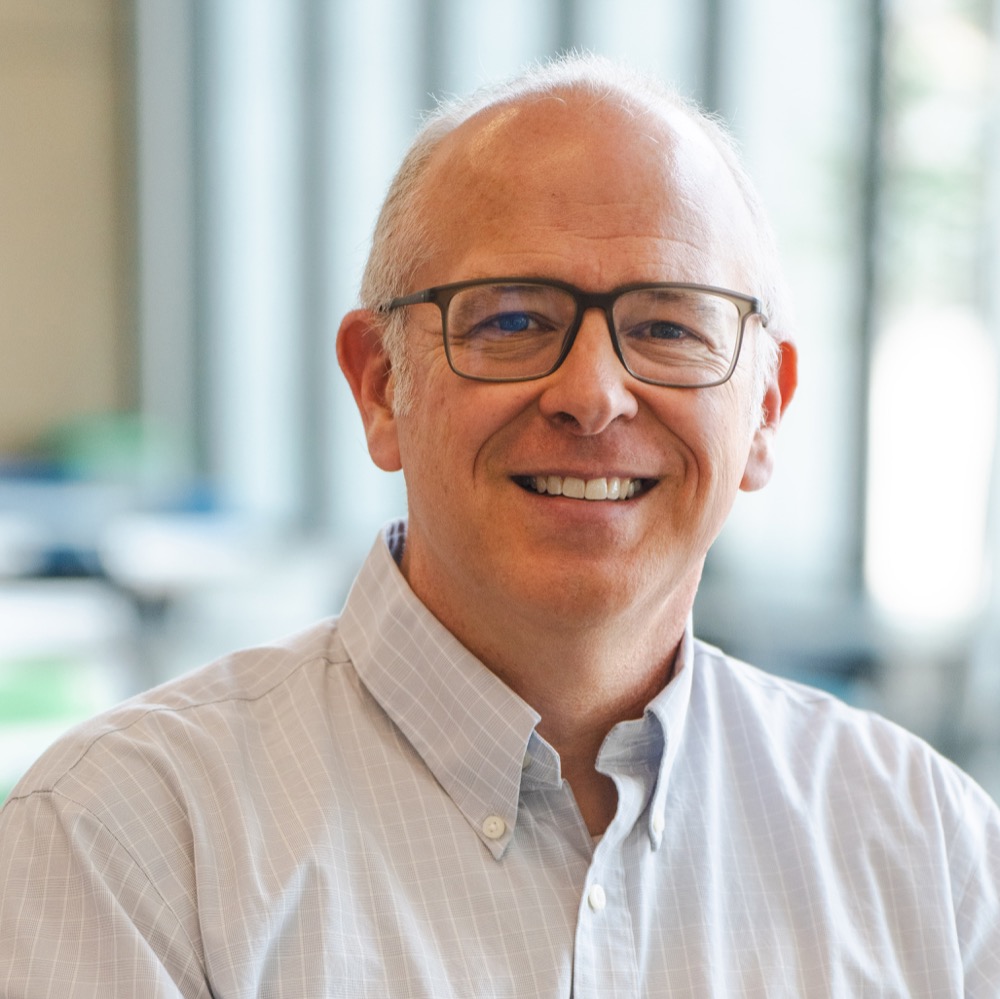
Headshot of David Wiley
David Wiley, PhD

Hi! I’m David. Welcome to my little corner of the web.

I'm Chief Academic AI Officer and Professor of Curriculum and Instruction at Marshall University. My teaching, research, and consulting happen at the intersection of generative AI, open education, entrepreneurship, instructional design, and student success. I am deeply interested in how colleges and universities - and their students, faculty, and staff - can transform themselves in order to thrive in the age of AI. I hold a BFA in Music from Marshall University and a PhD in Instructional Psychology and Technology from Brigham Young University.

My work has been covered by
Wired MIT Technology Review The New York Times NPR Forbes Fast Company The Chronicle of Higher Education EdSurge Inside Higher Ed Time

Research

For nearly 30 years my research has focused on finding ways make education more affordable and effective. I've received several recognitions for my work, including a National Science Foundation CAREER grant and appointments as a Nonresident Fellow in the Center for Internet and Society at Stanford Law School, a Peery Social Entrepreneurship Research Fellow in the BYU Marriott School of Business, a Visiting Scholar at the Open University of the Netherlands, an OLNet Expert Fellow at the Open University of the UK, a Senior Fellow for Open Education at the National Center for Research in Advanced Information and Digital Technologies (Digital Promise), an Ashoka Fellow, and a Shuttleworth Fellow.

20K+ CitationsMy work has been cited more than 20,000 times.
$15M+ in GrantsI have been PI or Co-PI on over $15M in grant funding.

Recent Publications

Current Projects

Under development

Kaiwa

Kaiwa is a system for creating, managing, administering, grading, and providing criterion-level feedback on LLM-powered conversational assessments. Currently in use in a single class.

Open source

openstax-graph

openstax-graph derives a typed, adversarially verified knowledge graph from an OpenStax textbook — concepts, real-world entities, the relationships between them, and an acyclic prerequisite map — so small and on-device models can tutor and retrieve from open textbooks.

Check it out on GitHub
open source

GenOER Reader

A proof-of-concept "generative OER" web app. Every layer of the app is openly licensed and runs entirely in your browser: an OpenStax textbook, a derived knowledge graph, and an open source, in-browser LLM. Meaning there's no backend, no accounts, and no cost. An experiment in building local, free, AI-powered learning.

Check it out on GitHub

Teaching

My teaching career has spanned a range of disciplines. I've taught in the Business, Computer Science, Entrepreneurship, Honors, Learning Design and Technology, Instructional Psychology and Technology, Instructional Technology, and Management Information Systems departments. I've taught as an adjunct, as three-year term faculty, and as tenure-track faculty. I'm currently Professor of Curriculum and Instruction at Marshall University.

I believe the most useful way to think about a course is as a campfire. A campfire has important nonsocial functions (like providing heat and light) just like courses have important nonsocial functions (like conveying information). But the most important function of both a great campfire and a great course is the manner in which they draw people together. A good campfire is a thing around which storytelling, singing, and other social interactions happen. The same is true for the best courses – they draw people into discussions, arguments, explorations, and even friendships. And it's within these relationships that we transcend simple memorization and truly transformative learning happens.

My philosophy of teaching can be expressed simply as Education is Sharing.

Courses Taught

Utah State University
  • INST 5280 Blogs, Wikis, and New Media in Education
  • INST 6280 Evaluation Methodologies in Instructional Technology
  • INST 6820 Instructional Design Studio II
  • INST 6870 Learning Objects and Learning Technology Standards
  • INST 7870 Philosophical Foundations of IT
  • INST 7000 Pro-seminar I in Instructional Technology
  • INST 7150 Introduction to Open Education
  • INST 7150 Review of Research in Internet-based Learning
  • INST 7150 Understanding Online Interaction
  • INST 7150 Advanced Seminar in Learning Objects
  • INST 7200 Quantitative Research in Instructional Technology
  • INST 7300 Qualitative & Interpretive Research in Instructional Technology
  • INST 7870 Philosophical Foundations of Instructional Technology
Brigham Young University
  • HONORS 295R Sharing the Gospel Using the Internet
  • IPT 301 Educational Psychology
  • IPT 515R Grant Writing
  • IPT 531 Introduction to Open Education
  • IPT 564 Instructional Design
  • IPT 682 Grant Writing and Project Management
  • IPT 692R Entrepreneurship in Education
  • IPT 692R Introduction to Open Education
  • IPT 692R New Media, Social Media, and Learning
  • IPT 692R Open Education Policy Seminar
  • IPT 692R Generative AI for Instructional Designers
Marshall University
  • CSD 482 Advanced Web Techniques
  • CT 107 Internet Fundamentals
  • CT 108 Conducting Business on the Internet
  • DBA 704: Doctoral Seminar (Generative AI)
  • ENT 200H and ENT 300H: The Brad D. Smith Student Incubator
  • MIS 200: Business Computer Applications
  • MIS 340: Introduction to Databases
  • MIS 475: Strategic Management Information Systems / Senior Capstone

Speaking

I speak all over the world at conferences, on campuses, to governments, and with leadership teams about generative AI, open education, and the future of higher education. From intimate workshops with community college leadership to invited testimony to the US Secretary of Education's Commission on the Future of Higher Education and everything in between, I'm passionate about helping people understand and navigate our current moment.

I'd love to work with your group to challenge, inform, and inspire you to more faithfully live your values and more fully accomplish your mission.

110+ KeynotesI've given over 110 conference keynote addresses.
20+ CountriesI've given keynote addresses in over 20 countries around the world.

TEDx

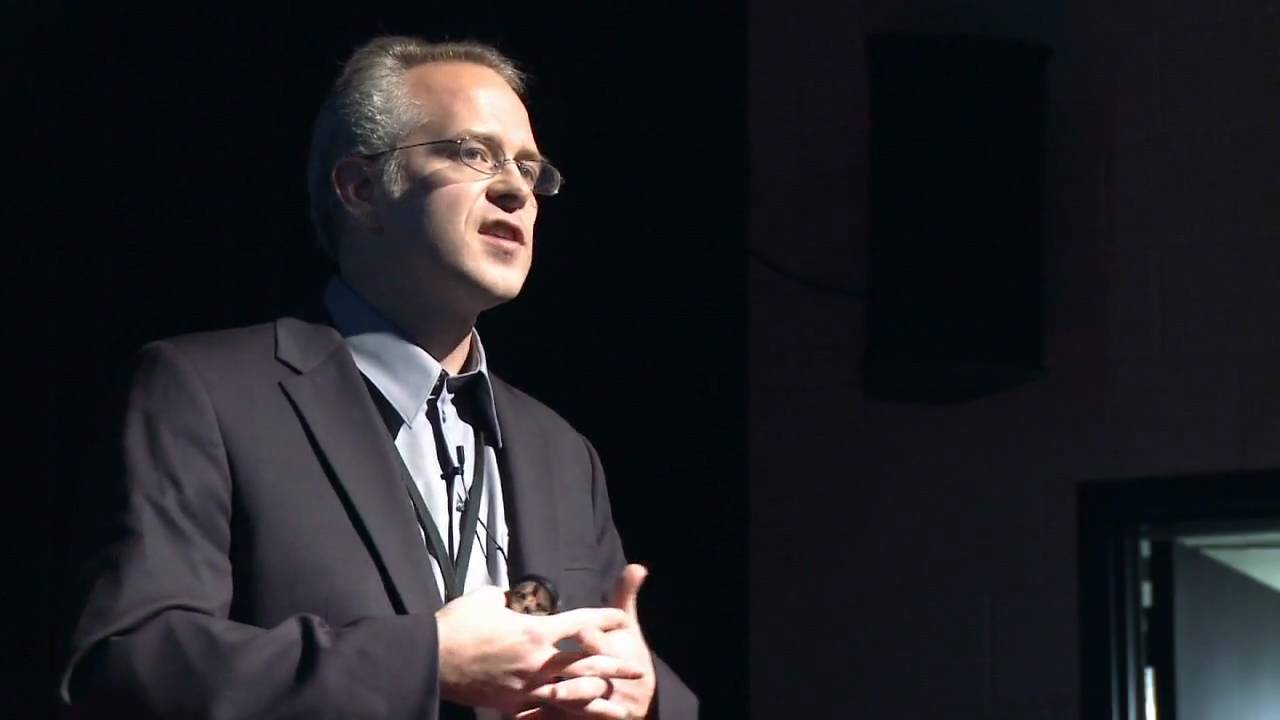
Still from David Wiley’s TEDxNYED talk
TEDxNYED, New York City, March 2010 — “Education Is Sharing.”

Keynotes

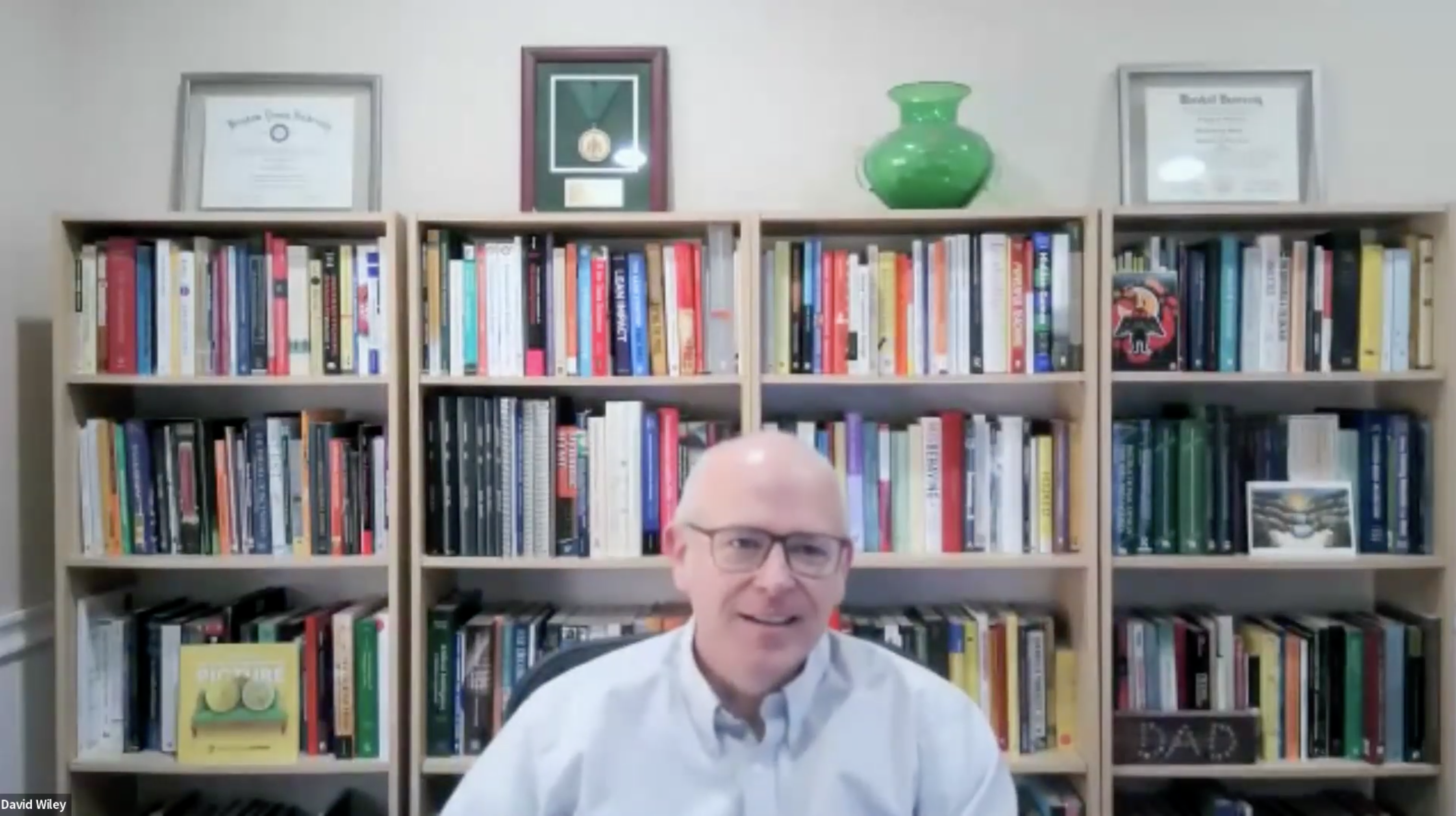
Still from David Wiley’s Open Ed Live keynote
Open Ed Live, February, 2025 — “In Search of the Perfect Blend: Open Ed and Generative AI.”

Podcasts

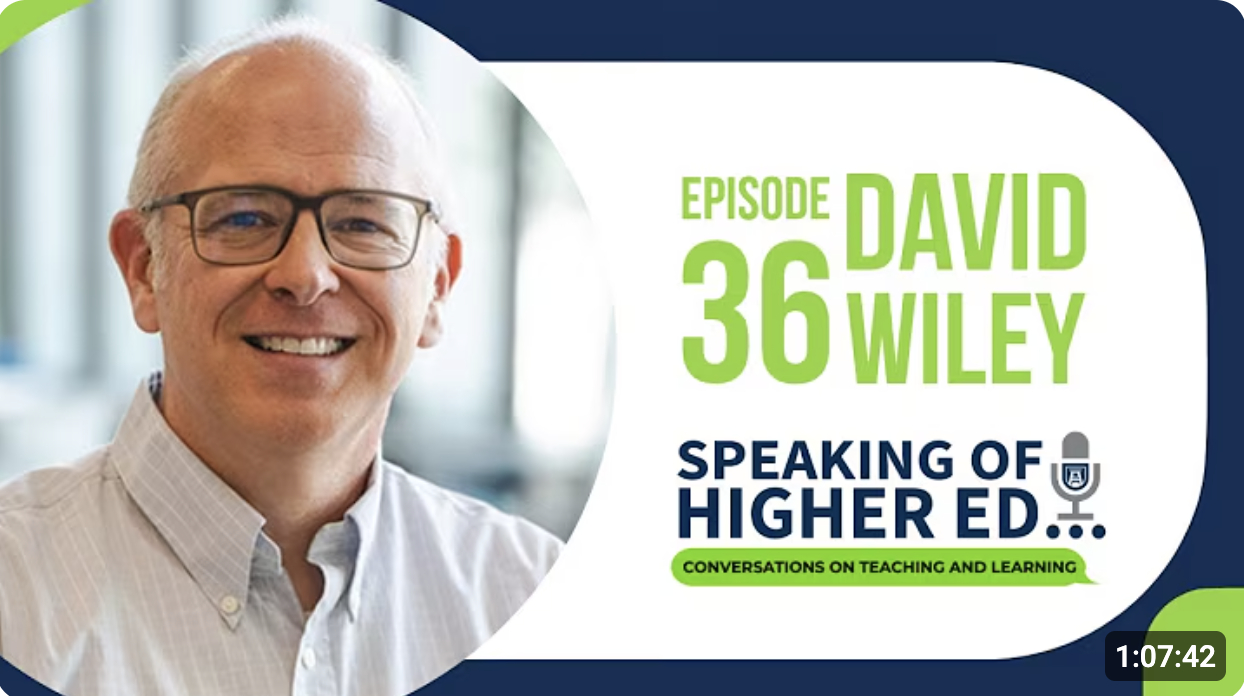
Still from Speaking of Higher Ed Podcast
Speaking of Higher Ed Podcast, December, 2025 — "Teaching, Learning, and OER in the Age of AI with Dr. David Wiley."
Planning an event?

Email me at [email protected] or (801) 709-1028.

Invite David to Speak with Your Group

Startups

I'm a serial entrepreneur - I love starting things and, once they're working, tranistioning them to amazing operators so I can go start the next thing. I created my first internet startup, InterSpec, in 1995 while I was still an undergrad at Marshall. And even though I was part of the team that launched Neumont University, and I later co-founded Degreed with David Blake, the startups listed below are three of my favorites. I don't work directly with them anymore, but they're still doing amazing work - check them out!

Higher Ed Courseware

Lumen Learning

I co-founded Lumen Learning with Kim Thanos in 2012. Lumen Learning provides high-quality, evidence-informed digital courseware designed to make teaching easier and learning more accessible. With seamless LMS integration, customizable course materials, and responsive faculty support, Lumen's courseware gives educators the flexibility they need while helping institutions deliver engaging, affordable learning experiences. Instructors can strengthen their teaching through Lumen Circles, a nine-week virtual faculty professional development fellowship focused on evidence-based teaching practices, collaboration, and reflection.

Lumen Learning
Online Charter School

Mountain Heights Academy

I founded Mountain Heights Academy (originally named the Open High School of Utah) in 2009 with support from the team at the Center for Open and Sustainable Learning. MHA's tuition-free, online courses for grades 7-12 are based on Open Educational Resources and allow students to customize their education, get the attention and flexibility they need, and find success. With unparalleled teacher interaction, personalized instruction, high state test scores and soaring graduation rates, Mountain Heights Academy is the highest rated, accredited online charter school in Utah.

Mountain Heights Academy
Conference

Open Education Conference

I founded the OpenEd Conference in 2004 and served as the conference chair and organizer for its first 16 years. The OpenEd Conference is an annual convening for sharing and learning about open educational resources, open pedagogy, and open education initiatives. OpenEd brings together over 1,600 educators and open education advocates in-person and online to collaborate, support, and drive strategies for education that are accessible, affordable, and reflective of the learners they serve.

OpenEd Conference

About Me

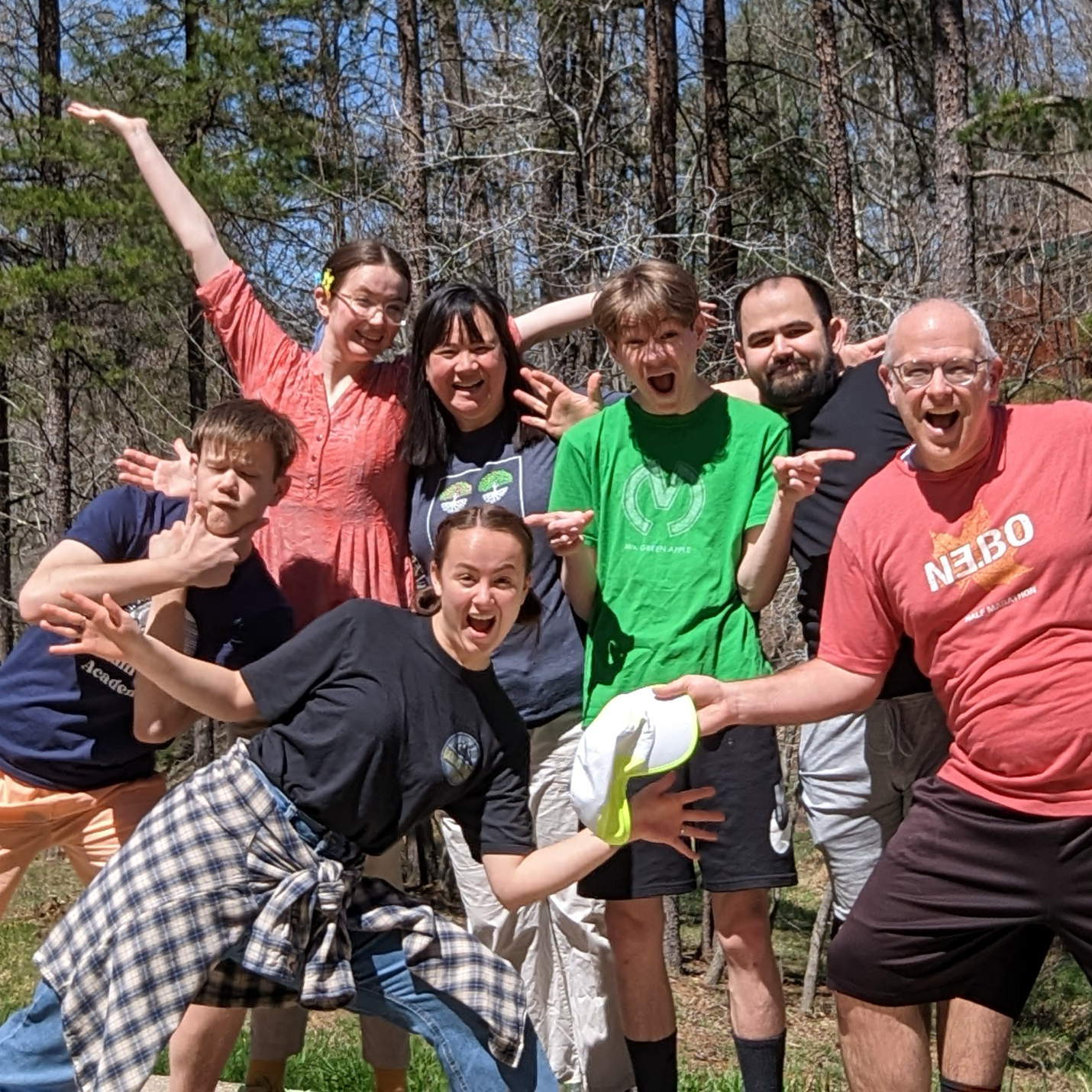
David with his family in West Virginia

My Story

In high school I was a show choir kid with a dream of going to Broadway. However, encouraged by my parents, I studied engineering during my first semester at WVU so I could get a "real job." But music kept calling to me, and I switched to Music Education the very next semester. When I transferred to Marshall University in 1993 I continued studying music... and was introduced to email.

The internet fascinated me. First email. Then Gopher and FTP. Then the World Wide Web. I was absolutely hooked on the web. I taught myself HTML by viewing the source code of other people's websites; first, using Lynx and later, Netscape Navigator. I knew the internet was going to change everything, and created my first startup - InterSpec - to train people in the Huntington area to use the internet. Soon I was making house calls configuring people's computers to dial in to the internet, creating websites for the City of Huntington and other local businesses, and helping the county school board setup a bank of modems so teachers could call in and connect to the internet for free.

In 1997, Marshall offered me a job as the university's first webmaster. It was working in this role that my vision of how the internet could change education started to crystalize. Working on a Javascript calculator, I realized there was something powerfully different between a digital calculator embedded in a website and a physical calculator. Only one person at a time could use the physical calculator, but an almost infinite number of people could use the online calculator at the same time. This magical property of digital resources (which I would later learn economists refer to as being non-rivalrous), meant that if we could just figure out how to fund the creation of digital learning materials once, we could share them freely with everyone around the world.

In early 1998, when the phrase "open source" was coined, I saw how these two forces - digital learning resources and open licensing - could combine to revolutionize teaching and learning materials. While the open source community was focusing on software, I launched the Open Content initiative, creating the world's first open source license for educational materials. (Years later, a UNESCO working group would rebrand open content as "open educational resources" or OER.) For almost 30 years now, in many roles with many organizations, I've advocated for combining the power of online resources with the power of openness to dramatically increase access to educational opportunity around the world.

In the early 2020s I saw history start to repeat itself. Generative AI began to arrive on campus - just as the internet had decades earlier - again, with the potential to transform everything. Instead of providing everyone, everywhere with access to learning materials as the internet had, generative AI is providing everyone, everywhere with real-time access to intelligence and expertise. Today, I work to combine the power of generative AI with the power of openness to both increase access to educational opportunity and increase the effectiveness and impact of those opportunities.

Family, Faith, and More

I currently live in West Virginia, where I was born and raised, with my wife Elaine and four of our five children. We love taking cross-country road trips, making music together, playing video games together, watching our favorite shows together, and generally just being together.

I’m an active member of the Church of Jesus Christ of Latter-day Saints. I served a two-year mission in Fukuoka, Japan in the 1990s and currently serve in the Stake Presidency of the Charleston, WV Stake.

I’m a amateur radio operator, callsign WV8O. You can find me on QRZ.

I love reading Brandon Sanderson and Ursula K. LeGuin. Also a big fan of Hugh Nibley.

I love performing. This summer (2026) I played John Hancock in a production of 1776 as part of Huntington’s celebration of the 250th anniversary of the Declaration of Independence. My past roles include J. Pierrepont Finch (How to Succeed), Curly McLain (Oaklahoma), Sid Sorokin (The Pajama Game), Nanki-Poo (The Mikado), and Perchik (Fiddler on the Roof).

I love listening to music by artists like Jacob Collier, Lauren Daigle, Natalie Layne, The Real Group, Sara Gazarek, The Manhattan Transfer, New York Voices, Take 6, Chanticleer, Voces8, Thelonious Monk, Emmet Cohen, Glenn Gould, Samuel Barber, Ralph Vaughn Williams, Ryuichi Sakamoto, Dreams Come True, and yes, Barry Manilow.

Once upon a time I dabbled in composition. Sketches is a collection of original short piano pieces recorded in 1991. More recently, I arranged and recorded a new rendition of the state song, The West Virginia Hills.

Where Else to Find Me Online